


 Petesy Burns played punk music in Belfast with Stalag 17, The Outcasts, Shame Academy, A.R.S.E., The Hoakers, F.U.A.L. and others. He was kind, irreverent and stubborn by choice. He supported Palestine and took stances that were unconventional. He had a role in the film Good Vibrations, as Pugwash, a rocker in the record shop. He practiced tai chi and in recent years, he climbed the challenging peaks of the Mourne Mountains, freshly married and evidently lit up. We lost Petesy to cancer on New Year’s Day, 2026. The international punk community has registered the loss and his hometown scene is in mourning. He will be missed.
One of his foundational strengths was the ability to find the value in punk and then apply it to a more liberating moral code. So, rather than being fixed in 1977, Petesy explored the deeper aspects of anarchism and moved onwards with an ever-questioning dynamic. He became a supportive figure in alternative communities. He tested out the lifestyle theories of Crass and applied them in real-time situations, in conflicted Belfast. In recent times, he talked of “kindness” as a critical fix for societal brutality.

Petesy during a 2019 video shoot for the Outcasts single, Stay Young’, by Paul McCarroll
I interviewed Petesy in July 2017 for my book, Trouble Songs. He was gracious with his conversation and insights. Below, I have included select quotes from that archive interview, which I have grouped under subject headings.
Growing up in the New Lodge, Belfast
“The New Lodge was basically just like a ghetto area, surrounded by the city centre on one side, Tigers Bay on the other side, so it was just like a wee Nationalist enclave right beside the city centre.”

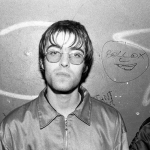
Petesy Burns, circa 1979, by the late Peter McGuinness
Hearing the Sex Pistols and ‘God Save the Queen’
“You know, coming from the Republican tradition that sort of pricked my ears because music wasn’t really big on the agenda round our way. It was more sorta clodding things at the army. And I remember just being in the bedroom one day, and I used to listen to my ma and da’s radio in their bedroom, I used to listen to the charts every week and then this week’s Number Two was ‘God Save the Queen’ by the Sex Pistols. But then it was banned and I’d never heard it on the radio either. And it being Jubilee year, at first I thought it must be some sort of song, celebrating the Jubilee.
“And then I thought, the Sex Pistols? I’m not too sure about that. And then when I thought about it, I had heard of Johnny Rotten but never really heard who they were. And then when I got it, there was an affinity initially with where I was coming from. You know, that whole anti-establishment, anti-monarchy, anti-British thing. As it was then – ‘God Save the Queen, the fascist regime’. The argument was won at that point.”
Hearing The Clash
 “What the Pistols were saying that wasn’t overtly political, more ‘personal political’ about getting off your ass and doing something. It was when I came across The Clash that I saw more of a direction. They were talking in more of a socialist way. I mean ‘Complete Control’ blew me out of the water and I thought, here’s a band, on a label, telling you ‘watch this game – look at what it’s done to us’.
“That to me was priceless. In the case of The Clash, not having a clue really what they were doing, and signing their lives away and when did you ever get a band where that happened? I hadn’t come across a band who were putting out that sorta thing and that lesson to people who were potentially young bands, wanting the same thing as they had. And that was amazing.
“I also became aware of the politics of bands like The Clash, through the reaction that they got to stuff that they did. I mean, they came over here [in 1977], going round all the military bases. In one way it was a bit sensationalistic, in another way you were thinking of all these Clash fans, all over Britain going, ‘Jesus Christ, is that place mad? Look what’s going on over there!’ And living here wasn’t strictly always like that, but it was a big element of it and it was good to see that being highlighted. Even though a lot of people thought, ‘that’s really tokenistic’ and at the time I thought that too. But there was a validity to it as well, and no-one else was doing it.
“And then the H-Block T-shirt [worn by Joe Strummer] – that ruffled the feathers locally so it did! But they were making a statement you know, and not necessarily a Republican one either, as far as I was concerned. It was just about this, basically concentration camp that existed, in a part of the United Kingdom.”
Going to the Harp Bar, Belfast, in 1978
“I used to work up in this Christian Brothers past pupils’ union – my da got me this job, this club up the Antrim Road. I wasn’t even aware of the Harp Bar at the time. Punk to me then, at that point, was going into town or going up to Good Vibes, or knocking about in our local discos getting a few punk records played and jumping about, getting picked on by spides and stuff like that so I never really knew what was going on in terms of how do you get to see bands. I’d been to see the Buzzcocks and The Ramones, and The Clash had played in the Ulster Hall and I’d been to see them but I didn’t know about anything regular. And in the [Christian Brothers] club, Gerry Morgan and Paul Gault worked there as well and when the Harp Bar opened they were talking about it, and they told me where it was. At that point, you wouldn’t have heard what was going on, where I lived. you went into town centre from New Lodge then you went out of it again. So it would have been probably the end of that summer, where they said, you have to come down. And even then, I was shiteing myself, because it was a completely alien environment. And also at the time, you’d be well aware that the area between the New Lodge and where the Harp was – York Street and Union Street – to us that was Shankhill Butcher territory.
“You bring all your usual sectarian values, at that stage I’m only 16, I’m going, ‘who’s that Prod, are they sussing me out?’ (laughing). I saw PJ and big John Gault was there, really made me feel welcomed because I was just sitting on my own with my half pint not looking at anyone, not talking. And of course John came over – ‘you’re coming into our company’ and then once other people see that you’re accepted or you know someone, you’re ok.
“It was an experience and a half because we used to have what they call fleadhs round the New Lodge. They were just basically someone stuck a trailer up and a band got on the back of it, and it wasn’t necessarily Irish music. That was the music scene – like a Bay City Rollers tribute band or whatever, that was music for me, or local bands doing covers very badly. So the first live music, the first band getting up there and plugging in a guitar and going, ‘this is one of our own’ – that in itself was like, ‘Jesus this is brilliant’.”
Stalag 17 and the song ‘Smash the Front’
“The Stillborns were Denis Glackin – ‘Denny Destructful’ and Marty Atkinson and I think [Bill] Guiney was in them at one point. They were sorta reformed and got me to join. So it was basically Denny’s song which was called ‘National Front’ and it was about this wee guy who used to work with us in the training centre in Boucher Road. He was a wee racist shite. The guy was a National Front fan. So Denny wrote this song, tongue in cheek, called ‘National Front’.
“The Stillborns eventually broke up there was a couple of the songs I liked, and I said, ‘can I have these songs?’ At the time Stalag 17 were up and running, that was ‘80, ‘81, that was when the uglier side of the skinheads and people like Johnny Adair and Skelly [right wing, UDA associates from the Shankill Road] came onto the scene. And we were doing a song called ‘National Front’ and we just thought, ‘that’s a bit too ambiguous’, because the way Denny wrote it, it was tongue-in-cheek and if you were listening to it, it could sound a bit like an anthem for the National Front. So we just changed it to ‘Smash the Front’. It became more of a rallying crowd for the ones who didn’t think like that, the ones who wanted to resist that.
“I used to live in Cliftonville and I’d come down the Crumlin Road and I’d come past Johnny and Skelly all the time. They were almost like a part of the crowd to some degree, even if a separate part of it. They used to come to Paddy Rea’s. And I’d be sitting there going, ‘What the fuck are you talking about, blacks stealing our jobs? What’s that about? Where?’ There was probably one black family in Belfast at the time. ‘Smash the Front’, for us, became more of a rallying call, for the ones who didn’t think like that, the ones who wanted to resist that. They’re insidious, they get in and then they start to just intimidate a wee bit, and then if they see they can get away with it, they just take over, and that’s what happens. They started to get sucked into that world, which was less and less to do with music and more to do with nutting people.
“One night we were playing with The Outcasts. They [NF supporters] were all there and they were fuckin’ taking over the dancefloor and they were being obstreperous and we were just like, ‘fuck this, we’re going to do ‘Smash the Front’ here. And of course everyone, all our mates, then fucking got up and they sorta shied away a wee bit and we thought we gotta make a stand to some degree here or we’re just gonna be picked off by these ‘uns.
“But then they got up, they pestered The Outcasts and Johnny and Skelly were in that wee band there at the time, Offensive Weapon. And they pestered their way up onto the stage and othey got up, and they did two or three songs and that one ‘Bulldog’ and the chant at the end was ‘National! National Front!’ And you were like, what do we do here? Kill them? But no, no, it was a gig, it was a punk gig, it was like we want to see The Outcasts and that’s why we’re here. They knew when they were about, it never really came to confrontation with them thankfully, but we weren’t about that anyhow, but they knew that we weren’t to be fucked with either.
“The gig in Larne was to me the best one ever, it was in Drains Bay of all places. And we did ‘Smash the Front’. They [local skinheads] all stood – about 10 of them anyhow – lined the against the front of the stage with their backs to us and the Nazi salute just out at the crowd, during the song. And every fucking person – every punk in the room just got up and formed a big semi circle round them, just fuckin’ looking at them. And one by one, ‘whoosht’ they just fuckin’ skulked off, apart from their leader who stood to the end and just looked stupid and people were laughing ya know? At first it was a bit of a hairy moment but then it was, here these ones are just wee boys really, like any of them, with the dynamic that’s going on here.”
Discovering Crass – the music and the ideas
“I’d pretty much dismissed Crass without knowing anything about them. I’d read about these aging hippies who were hijacking punk and in the true tradition of someone who wasn’t that well educated, working class I went, ‘fuck that, they’re not punks!’ I never even gave them a moment, never gave them a chance. Whenever, they were coming over they had just released Christ – the Album. The first song was ‘Have a Nice Day’ – and I was going OK, we’ve got a fuckin’ message here, never mind about all the rest of that bullshit. So that piqued my interest, thinking that’s very clever actually, that is really challenging stuff, and even then I wasn’t that interested. And then we got the gig [in 1982] when they played in the Anarchy Centre – we got on one of the days with them.
“I went down on the Saturday, and maybe the magic mushrooms helped for me along the way, I’m not sure! But I just walked into the place and it had been transformed completely, because everywhere they went they just brought everything. They brought their own PA, they brought the lot with them, they had their banners all round, they had the screens. I remember the ones in Just Books [anarchist bookshop] going, ‘this is a big thing, for them to do this and they’re doing it because they want to do it, they’re not going to make money out of it they’re going to lose’. And we couldn’t get that concept at the time, coming over with all this entourage and all this stuff, going to be out money – so there’s something more going on here than anything else.

Crass at the Anarchy Centre, Belfast, 1982.
“The night before, Steve Ignorant [from Crass] and a couple of the others came round to Paddy Rea’s just to have a pint with us. They wanted to see something apart from where they were staying in Belfast and they wanted to meet some of the local punks. And I thought, ‘this is fuckin’ brilliant’. The sort of level of conversation you were having with them. They were listening! Ok at the time I was about 20. It was almost like a school teacher / pupil relationship you were having with them because you were a wee bit in awe, because they were very middle class and very well spoken. But they listened! And the thing I saw that day about what was going on was they were really connecting, they were there, they were accessible. And it wasn’t just talking about the band you could talk to them about anything.
“I was talking to them, off my head, about drugs. It wasn’t actually until the Sunday when I was a bit straight that I actually saw the band then and thought, ‘these ones are doing something a wee bit beyond what I can understand that punk is, or that I’ve seen before’. This is not, at all about the performance – even though they are performers and they’re all in black and it was very aggressive and very militaristic. I thought there’s something else going on here that I need to be looking at. There must be another way of doing this, and I was completely unaware that they had been doing it since The Feeding the 5000. They just did it all themselves.
“That’s when I started to do my homework on what they had been about and what they’d done, finding out about Dial House [in Essex] and the whole hippie commune thing. And on some level, I thought this whole thing was contrived, because this is a project to them, it’s not like a lot of us who just joined the band. But the other side of that is they’re enabling, because there’s a band with them, Dirt, who were on their label. There’s all these other bands then I’d never heard of, the likes of Conflict and The Mob. They’d just taken the money from their own sales and put it back into a label. So I thought that was a fantastic thing.”
Putting on gigs at The Manhattan bar
“The Manhattan was our first attempt at doing like a ‘punk club’ where people felt they could go every week and there’d be bands playing or there’d be something on. You can’t always blame the people who own the bars… some of the ones that came in were punching holes in plasterboard walls or they think it’s funny to kick a cistern in or toilet bowl or a sink. So those two dynamics working together means that most of the places you went to were short lived.
“By the time we got to the Labour Club, Just Books and the people who were running the cafe there were just give it up, so we went, ‘we’ll do that, then’. At this stage the very loose bases of the Warzone Collective were coming together. It was basically just a few bands who pooled their gear and their resources to play and do gigs together. But then when the Labour Club – it wasn’t a big venue but it was decent enough and they were pretty amenable to us coming in and doing stuff in it – and that was the first time then when the idea formed of starting to bring bands over.
“We would have brought over the likes of Conflict and Dirt – bands that were anarchist-based in their outlook and aspirations. So there was a real crossover there of politics starting to come into it. We were bringing the bands over and we were feeding them, we were making sure they were looked after, had somewhere to stay, and we’ve got to have something a bit more solid.
“What the Anarchy Centre was trying to say to us at the time is you got to create it yourself, because no-one’s going to create it for you. The City Council aren’t going to create it for you, because they don’t give a fuck. The bar owners are going to do it as long as it suits them – you may piss them off or you might not be profitable anymore. And also when you think about it in that respect, everything you’re bringing in is either going to the bar or going to the band which is fair enough but at the end of the day you’re not left with anything that’s your own.”

Petesy Burns at Giro’s in the old Plaza buillding. Photo by Frankie Quinn
Setting up at Donegall Street. Giro’s, aka the Belfast Youth and Community Group
“We spent a long time going round town and looking at places and having ideas about what we’d do and how we’d do it. That’s when they opened the Unemployed Centre, that was about ‘85, that was a good development because of two things. We were looking for a base, not just for the cafe, quite a small space we had, we were looking for a base where we could do something in practical terms to raise money and also it suited them because they were looking for an unemployed group to be in the place. They were the Unemployed Centre, they wanted an unemployed group that was really positive and working towards something – it was a match made in heaven, almost.
“We were still not sure what we were doing but they were sort of throwing things at us, like ‘have you thought of a cooperative?’ So we were coming up with all these hair-brained ideas of making our own speaker cabinets because we were musicians, and trying to sell them to the local shops, making lights and stuff. We were doing all this market research and going to courses about cooperatives and their structures but again after a while we thought. ‘we’re not going to do this’ and it’s also taking us away from what we are.
“And then at some point, someone came up and said what about a registered charity? You’re an unemployed group, you’re trying to create resources for other people, here’s all the boxes that you’re ticking – all you have to do is get a constitution. What’s a constitution? Formality! Even there some of the punks were like. ‘What? Have meetings? Get a phone? Sell out to the system?’ and others were like, well, we gotta do something, we’re all talking about making this happen but what’s anyone doing apart from going round to each other’s houses with carry outs and getting out of it or going to gigs the odd time? So give it a shot!
“We managed to be coherent enough – we sent out general letters to loads of trusts all over the place. And because it was Belfast, there was nothing happening, it was non-sectarian, it was cross-community, and all of a sudden we started to get interest. And at that time just behind the unemployed centre, this building came on the market and we were using their place as a practice room and doing their heads in, they were trying to do work and do interviews and there was all this punk music – they just wanted rid of us. And they said there’s a building next door, if you think you can cover it, make enough to pay the rent we’ll do all the rest, put a couple of high brow trade unionists on your committee, we’ll be guarantors and we just thought ‘do it’ just get into the place. And that’s where the first Giro’s came from, on Donegall Street Place.

Petesy Burns at Giro’s in the old Plaza buillding. Photo by Frankie Quinn
Moving to the old Plaza Building
“The first Giro’s was £2,000 a year rent and we were jumping up to like £9,000 and that was going to be a contentious issue. OK well, if we’re going to take this on, it’s not going to be like the bohemia of down the street. We have a commitment to bring in so much per month, to pay this rent.
“Luckily by that stage we had a fairly good relationship with the Arts Council. John Morrow was the Community Arts Officer. And we used to have collective meetings every Wednesday – a wee bit Marxist, but we insisted if you were in a band you had to be there to book a practice. If you didn’t show up, you weren’t in the collective so you didn’t get to book – and it worked ok. People came down – a lot of them would just fuckin’ sit there till the end of the meeting, and then book a practice, but other people would go. ‘what are you doing, what about this?’ John Morrow came down to one of the meetings and he was just blown away, said ‘this is brilliant, this is fantastic’. So we started off in a very good place with the Arts Council and by ‘91, when we moved there, we were confident enough and he was assuring us: ‘look you gotta believe in yourselves, you gotta structure your application in such a way that you’re justifying getting more money from us. We’re not too concerned about where the money goes in terms of if it needs to go towards rent or running costs’ – basically, you were becoming a client.
“I think that was the thing that clinched it for us. We’ve got the safety net there – if we can even get part of the rent paid, it’s still a sizeable amount, the running costs and all that but it became ‘this could happen!’. This could house, in a real sense, what we’ve always wanted – and even though we used the other Giro’s as a venue, what we always wanted was our own venue and here it was. That one went for 12 years. We worked as a collective for better or for worse, we always saw ourselves as we’re doing this because we want to do it.
“So, no-one was employed, there was no wages, no-one got paid anything. There was a few kickbacks – if you were in a band, you got your practice time, or you got fed in the cafe, but no wages changed hands. So over the years, what we managed to do was develop a real strong volunteer base. There just wasn’t the cohesiveness – for finding funding for jobs. There was a lot of practical and ideological arguments that I won’t go into.
“We got this Enterprise Ulster relationship where they were providing a lot of training scheme places. You had to either get on a training scheme or get off the dole at that stage. So we had these things set up, we always had X amount of volunteers, come to us, get their extra tenner, do a few hours here and there and then that’s the dole off their backs. That all started to change and get tighter, as we got to 2000, 2001 it became very obvious that there was less and less people able to just take on the committment. No matter what’s going on you need a core staff.

Petesy Burns at Giro’s in the old Plaza buillding. Photo by Frankie Quinn
“But you also need it to such an extent that you’re willing to sit through all the drudgery and sit at a desk all day long, and do all the shite stuff that needs to be, you know? And by that stage now I’d had my first child in 1996, and my priorities personally – I can’t give the time I give when I was in my early 20s. I’ve gotta think of ways of bringing in money to do that and a lot of people were coming into that position. So it was a conscious decision around 2002 – look, we’ll give this another year and then we’ll plan a closure. A big closing month of events saying “this is what we did. If you want to do it yourself, do it but you’re not going to do it in the way that we did it because it’s not 1986 anymore. We knew there was a lot of people disappointed and who had good ideas but we knew by the same token they couldn’t step up into the same thing because it wasn’t going to be sustainable the way it was.”
Punk rock and food politics
I remember going to the Crass gig and getting the handout about factory farming, taking it home and going, ‘this is fuckin horrific’ – just as a sentient teenager. So by the time it came to Giro’s, when you’re in that world you find like-minded people, it was a no brainer – there’s no veggie / vegan place in town, let’s create one.
“And the politics around the whole thing, the hunts [saboteurs] group just blowing horns at hunts every week. The Animal Release Movement were just down the street – they had done stuff on a small scale until they met us. And we were filling vans every week, sending punks to go out getting the tactics and knowing what to do – Giro’s had a very strong hunts sab group for years. Very effective, we got to know our onions after a while and what to do. But also being aware of what you’re eating, which none of us would have been aware of because you’ve left home and you’re living on mashed potato and beans on toast, sausages and sandwiches.”
The veggie burgers at Giro’s
They were very famous. Because you’re bringing in that element – you’re bringing people in who know what they’re talking about. We were still veggie but we weren’t balancing – and then you got people in who were saying, ‘you should have a bit of this with that’, and you were learning all about nutrition.
Alternative culture and personal change
“There’s a personal and a social context. If you think back to the Harp Bar, the Punk Workshop Terri helped to create, and the Good Vibes label, the DIY thing – on a social context it was taking that stuff and bringing it to another level, another social level. I mean, Good Vibes was a social hub, but it was a record shop. We were the closest to what we saw on the continent as ‘social centres’. To this day, they’re still there. I went over with Stalag 17. In 1986 we toured Holland, Germany and Belgium, and I was just blown away, by not just the squats but the social centres that were ran by young people and punks and funded by local councils. Now we did it on a similar mode,l but in a different way, by being a charity and getting funding in to run the place. But in a social context, it showed people – ‘this is what you could do’. We didn’t have any skills, we had enthusiasm. The skills we had were maybe as musicians and not great at the time, but we knew how to make things happen, how to have vision, how to get up off our arses and learn how while we were going, we had the drive to do that.

Petesy Burns at his marriage to Anthea in 2023.
“And in a personal capacity, so many skills in terms of, even interpersonal skills and the shite you have to deal with from bureaucracy and the people coming across your door, the confidence that gave you and also the freedom people had within it, to pursue. They could do things practically. They weren’t sitting at home wasting away, just drinking.
“There’s a couple of different legacies there. Socially, this was done, and this can be done. When your head’s down, you don’t really see what’s going on around you. For me sometimes, it became a wee bit of a ghetto and having been like that for so long I had a hunger for what was going on in other places, and what was going on…and also then wanting to get into the music because I’d been facilitating it for so long.
“That’s the legacy of it, where you can look at practical things that it did. Not overnight, as is sometimes portrayed. Even within that, I lived in the New Lodge, I was still a New Lodger but there was something that made me a wee bit different – it was drawing me out. I maybe sometimes romanticise it, as if it plucked me out. That wasn’t the case. You were extricated but you went back into it with all that – what you’d been brought up with.”
Stuart Bailie
(With condolences to Petesy’s friends his family and to Anthea.)







 Twitter